Master’s Students Win Gold at Indigo Design Awards for “Lady Parts”
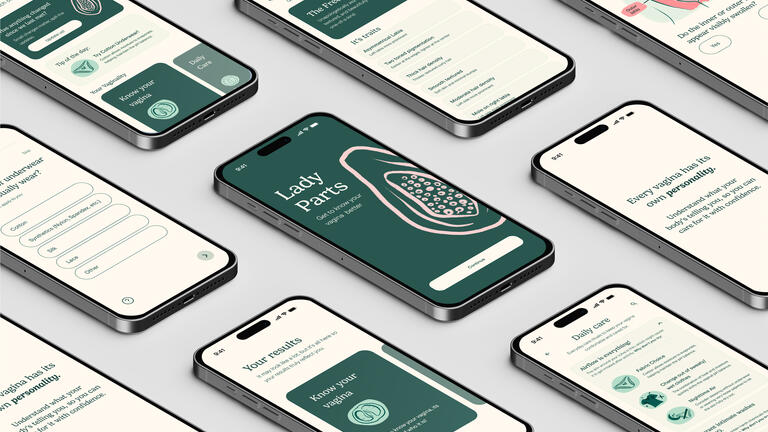
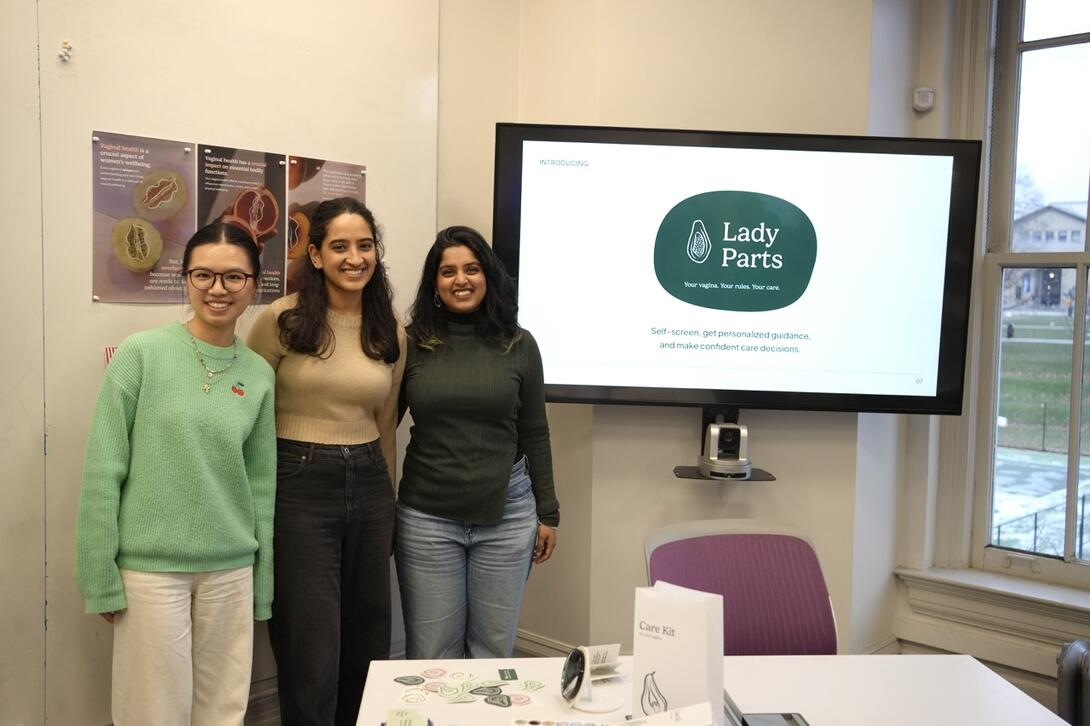
Carnegie Mellon University's School of Design Master's students Sahana Sundararajan (MDes ’27), Sneha Rao (MDes ’27), and Qing Hu (MPS ’26) have been awarded Gold in Interaction Design (Student category) at the 2026 Indigo Design Awards for their project Lady Parts, a care system designed to help young individuals take charge of their vaginal health.
At its core, Lady Parts addresses a topic that is often overlooked, under-discussed, and deeply stigmatized. “Vaginal health is deeply personal and varies across individuals, yet it's widely stigmatized,” the team explains. “Most people don't talk about it, and there's very little guidance that fits people's actual needs.”
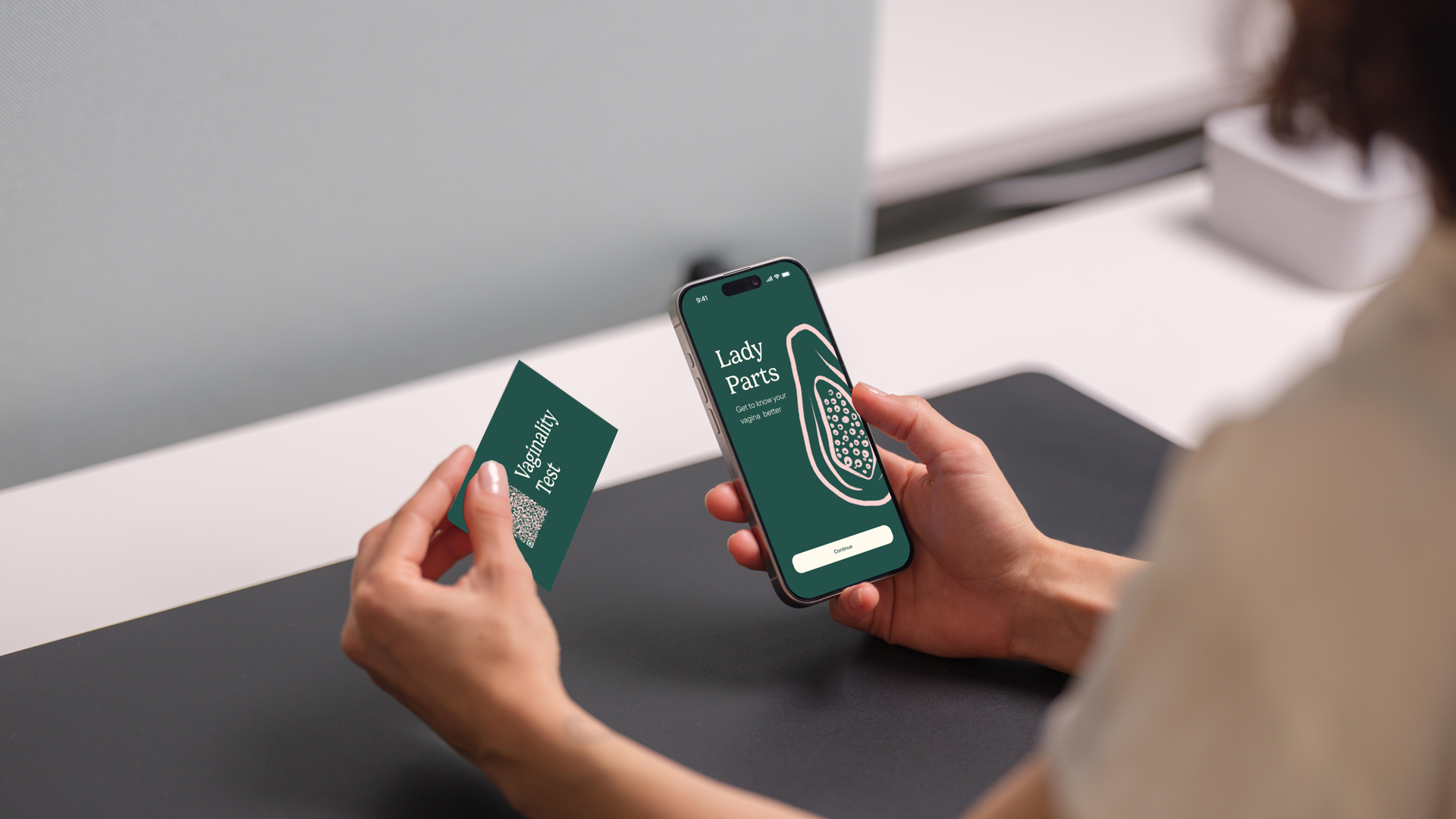
The project responds to this gap with a thoughtfully designed, accessible system made up of three interconnected components: a self-screening tool that helps users examine their bodies with confidence; a personalized questionnaire called the “Vaginality Test,” which replaces overwhelming online advice with tailored information; and a Care Kit that provides products and resources matched to each user’s results.
Designed with accessibility and everyday use in mind, the system is intended to live in university spaces—washrooms and wellness vending machines—meeting students where they already are. By embedding care into familiar environments, the project reframes vaginal health as a routine part of self-care rather than a taboo subject.
The idea for Lady Parts emerged from the team’s own lived experiences. As international students from the Global South navigating life in the United States, they found themselves confronting not only gaps in knowledge but also cultural stigmas around gynecological health.
“We've all dealt with not knowing how to handle our own vaginal health—who to ask, what to ask, what's normal and what isn't,” they share. “Being in a foreign country adds another layer: you don't know where to go, what questions to ask, what exams to expect, or how the healthcare system works.”
Through candid conversations with one another, the team recognized a shared sense of confusion and discomfort, an experience they knew extended far beyond their own circle. Lady Parts grew from those conversations into a system designed to foster openness, provide clarity, and connect users to care.
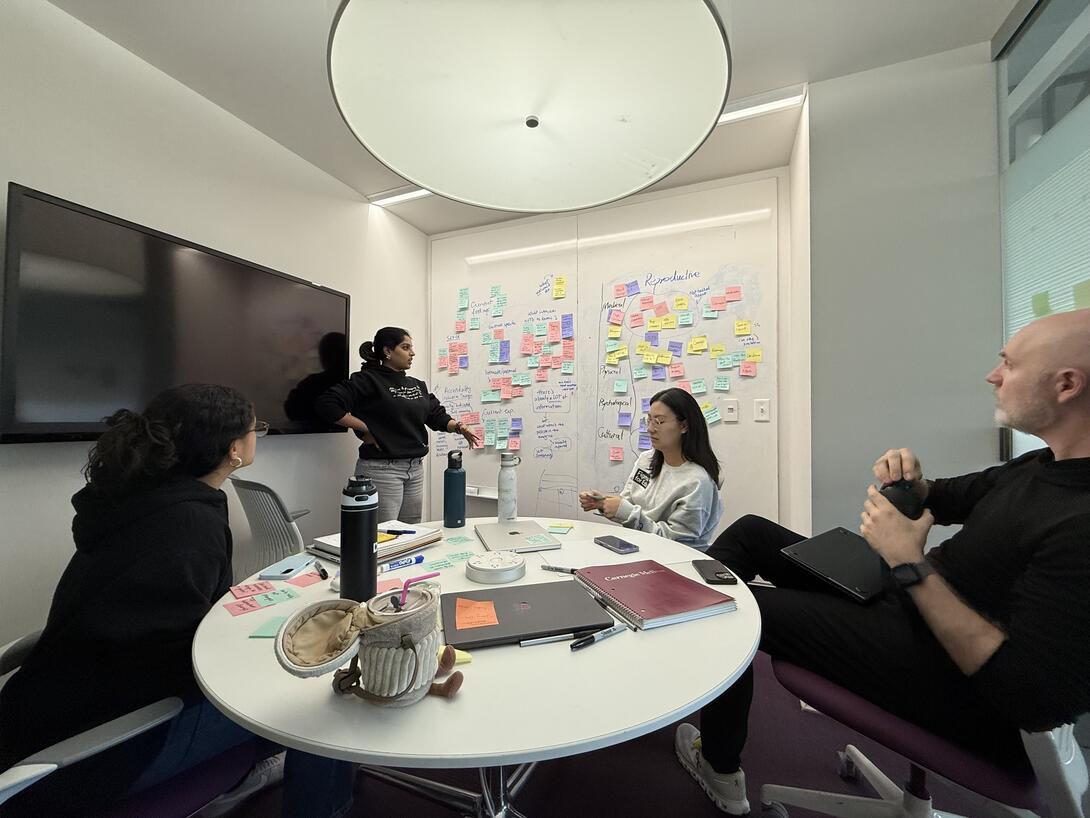
“Confidence. That’s the core of it,” they say. “If we can help young individuals feel just a little more prepared and more in control of decisions about their body, that's a huge win for us.” They also hope the project encourages more open dialogue and helps bridge the gap between college students and local medical resources, making it easier to seek care when needed.
The team’s recognition at the Indigo Awards came as a surprise. “We actually thought we didn't win at first,” they recall. “Then the next day we got the email and realized we were on the list after all. We were really happy.” Beyond celebration, the award has reinforced their commitment to continuing the work. “This topic is very complex… the recognition is really just fuel to fully see this through.”
The project was shaped by a strong network of support within the School of Design. Associate Teaching Professor Andrew Twigg played a key role in guiding the team, encouraging exploration and connecting them with external experts, including a local birth doula who informed the project’s development. Faculty members Kristin Hughes, Ashley Deal, Raelynn O’Leary, and Stacie Rohrbach contributed critical perspectives, while collaborators in the 3D Lab and their peers helped bring the prototype to life.
Together, these contributions reflect the collaborative, interdisciplinary environment that enabled Lady Parts to evolve from a personal conversation into an award-winning design intervention, one that challenges stigma, empowers users, and reimagines how care can be accessed and experienced.