INDEX Archive Brings a Global Design Legacy to Carnegie Mellon
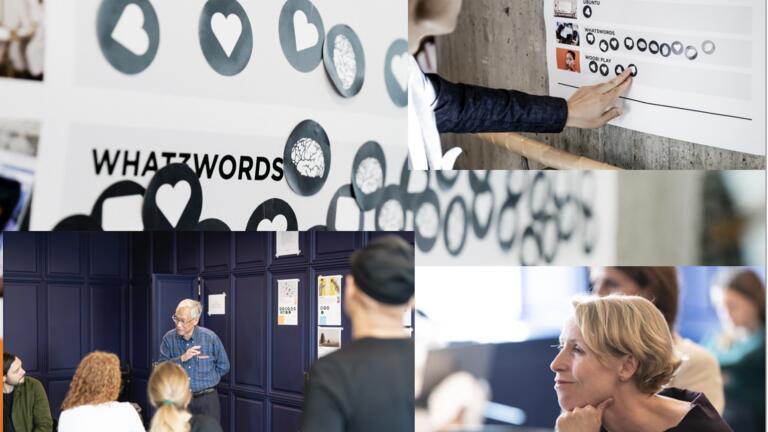
For more than two decades, the INDEX Project asked designers to consider a question that went beyond form, function or commercial success: How could design improve people’s lives?
The project’s history, methods and global collection of socially and environmentally focused design have now found a new home at Carnegie Mellon University. Launched on June 19, 2026, The INDEX Project is an open-access digital resource that preserves the work of the international initiative while creating new opportunities for students, educators and researchers to learn from its evolution.
The archive came to Carnegie Mellon through Arnold S. Wasserman, a 1956 alumnus of the School of Design and a founder and jury chairman of INDEX. Wasserman donated the digital collection to the university in 2024, continuing a relationship with the School that began nearly 70 years earlier.
Associate Professor Peter Scupelli, Chair of Design Studies and Director of the Learning Environments Lab, is leading the effort to bring the archive into the classroom and make its resources available to a wider audience.
Rethinking What Design Could Accomplish

INDEX emerged at the beginning of the 21st century as a challenge to prevailing ideas about Danish design. Although Denmark had become internationally known for the furniture, products and visual language of mid-20th-century modernism, INDEX sought to direct attention toward the problems designers would need to confront in a new century.
Following a period of global research that began in 2001, Wasserman proposed that INDEX introduce the concept of “Design to Improve Life” in 2002. The organization wanted to move areas such as social design, sustainable design and design for impact from the margins of the profession into mainstream design practice.
Its first major initiative, the INDEX Award, issued its inaugural call for nominations in 2004 and presented its first awards the following year. Rather than organizing entries according to traditional disciplines such as product, communication or environmental design, INDEX considered how a design affected life in five broad contexts: Body, Home, Work, Play and Learning, and Community.
That decision placed the emphasis on what a design accomplished in the world rather than the professional category to which it belonged.
“The world’s most critical problems cannot be solved by technology alone,” Wasserman said of the thinking behind INDEX. “There is no bigger project than designing world 4.0.”
Held biennially from 2005 through 2023 under the visionary leadership of President Kigge Mai Hvid, the INDEX Award developed an international platform for designers addressing urgent social and environmental needs. Its honorees included projects related to health care, accessibility, education, climate, economic opportunity and public life.
INDEX also worked to expand who could participate in conversations about design. Its open nomination process gathered projects from around the world, while its five categories encouraged jurors and audiences to compare very different forms of design according to their effects on people’s lives.
From Recognition to Education and Investment
The award became the foundation for a much larger undertaking.
Wasserman describes the project’s development through four overlapping stages: “Award Backward,” “Educate Outward,” “Invest Forward” and, ultimately, a phase that looked beyond the original formulation of “Improve Life.”
The first stage used the award to identify and celebrate work that had already demonstrated design’s potential and was being used in the real world. The second stage carried the ideas and methods behind that work into classrooms, workshops and institutions.
INDEX began developing education initiatives in 2009 and launched international student design labs in 2011. By 2017, its educational programs had reached approximately 50,000 students, teachers, trainers and decision-makers in countries including Denmark, Sweden, Finland, the United Kingdom, South Korea, China, India, Chile and Iceland.
The goal was to give people beyond the professional design community practical ways to identify problems, understand the people affected by them and develop responses rooted in their own communities. As Wasserman says in the organization’s playbook, design is “far too important to be left just to the designers.”
That expansive view raises a fundamental question: What is design? Wasserman said INDEX adopted its understanding from Carnegie Mellon’s own Herbert A. Simon, who wrote in The Sciences of the Artificial, “Everyone designs who devises courses of action aimed at changing existing situations into preferred ones.”
INDEX next extended that work into investment. This initiative connected promising design ventures with funders and taught designers how to explain the social purpose, practical value and financial potential of their ideas through a program called “The Venture Pitch.” The Design to Improve Life Fund, established in 2017, invested in companies emerging from the INDEX Award pipeline.
Together, the programs formed a cycle. The award identified and promoted promising ideas. Education enabled more people to apply design methods to real problems. Investment helped selected ideas grow beyond an award or exhibition and reach the communities they were intended to serve.
INDEX also cultivated a global community of designers, educators, entrepreneurs, jurors and partner organizations. Through exhibitions, events and digital resources, that network shared examples of how design could contribute to a more equitable and sustainable future.
A Resource for the Next Generation
The history of INDEX closely aligns with the School of Design’s longstanding commitment to examining design’s role within complex social and ecological systems. It also makes the archive more than a record of past award recipients.
The collection gives students access to more than two decades of ideas about what designers should address, how they should define impact and how promising proposals can move from recognition to education, implementation and investment.
Scupelli has already explored INDEX’s principles through his teaching. Orbit, a project developed in a 2022 graduate studio, applied the Design to Improve Life philosophy to the environmental cost of products purchased for newborn children. The student team translated the broad objective of achieving carbon neutrality by 2050 into a rental and reuse system designed to reduce household consumption and material waste. Orbit later received recognition from San Francisco Design Week.
The archive can support similar work by giving students concrete precedents to study. Rather than encountering sustainability or social impact only as abstract aspirations, students can examine how other designers defined a problem, developed a response, communicated its value and brought it into adoption in the real world.
The INDEX Archive also preserves the evolution of INDEX itself. Over time, the organization moved from celebrating individual projects toward addressing the larger conditions that determine whether good ideas can spread. Its later work considered challenges including artificial intelligence, misinformation, migration, economic inequality and the need for more ethical forms of leadership.
INDEX described its ultimate ambition in equally expansive terms: supporting health, justice, learning, creative opportunity and sustainable prosperity for a global population living within the resources of one planet.
At Carnegie Mellon, that ambition now becomes material for a new generation of designers. The archive preserves INDEX’s history, but its larger purpose looks forward. By bringing its projects, methods and questions into the classroom, The INDEX Project extends a conversation that began more than two decades ago: not simply what designers can make, but what design can make possible.